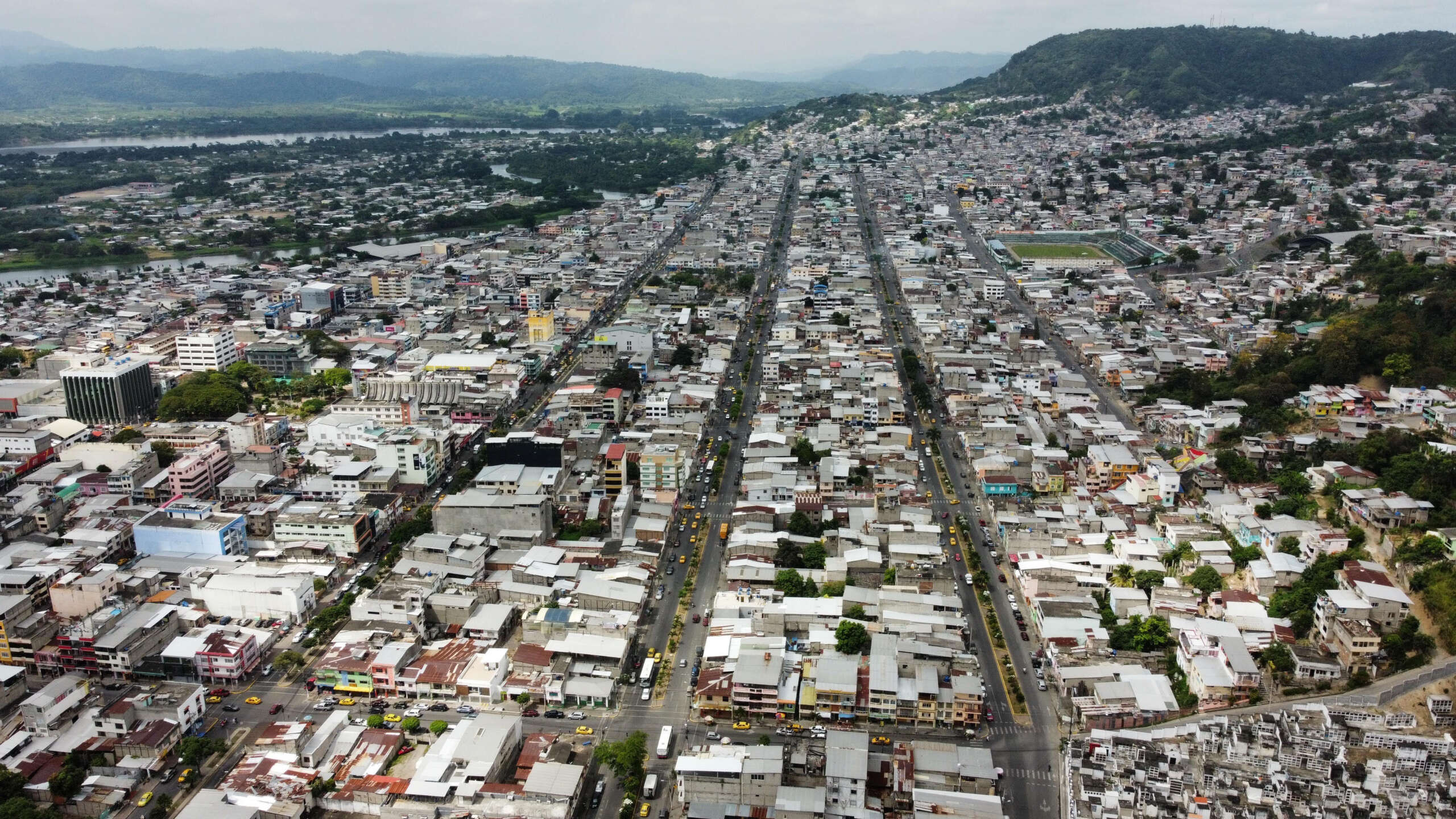
Factors Influencing the Involvement of Minors in Organized Crime Groups (OCGs) in the Canton of Esmeraldas, Esmeraldas Province, Ecuador
DOI:
https://doi.org/10.63207/k15w7j52Keywords:
organized crime, Esmeraldas, minors, poverty, youth recruitmentAbstract
This article analyzes the social, economic, and family-related factors that contribute to the recruitment of minors into Organized Crime Groups (OCGs) in the canton of Esmeraldas, one of the most violence-affected areas in Ecuador. Using a mixed-methods approach, the study surveyed 1,021 secondary school students and conducted interviews with three local authorities, combining empirical data from both youth and institutional perspectives. The findings reveal that structural poverty, family disintegration, low parental education, unemployment, and weak state presence are key factors facilitating the involvement of adolescents in criminal organizations. The study also highlights the perception of crime as a pathway to social mobility, especially in communities where economic and educational alternatives are scarce. Adolescents identified improved education, youth employment opportunities, stronger family and community ties, and preventive social programs as the most effective strategies. The article concludes that the issue cannot be addressed solely through punitive measures, but rather through comprehensive, rights-based public policies that integrate education, employment, social protection, and community strengthening as sustainable responses to prevent the involvement of minors in organized crime.
Downloads
References
Albanese, J. S. (2012). Deciphering the Linkages Between Organized Crime and Transnational Crime. Journal of International Affairs, 66(1), 1–16.
Bales, K. (2005). Understanding Global Slavery: A Reader (1a ed.). University of California Press. https://www.jstor.org/stable/10.1525/j.ctt1pnpdg
Education, E. I. O. (2024). Formas y tipos de delincuencia juvenil. Euroinnova International Online Education. https://www.euroinnova.com/derecho/articulos/formas-de-delincuencia-juvenil
Erikson, E. H. (1969). Identity, youth and crisis. New York: W. W. Norton Company, 1968. Behavioral Science, 14(2), 154–159. https://doi.org/10.1002/bs.3830140209
Farrington, D. P. (2006). CHILDHOOD RISK FACTORS AND RISK-FOCUSSED PREVENTION.
Finckenauer, J. O. (2005). Problems of definition: What is organized crime? Trends in Organized Crime, 8(3), 63–83. https://doi.org/10.1007/s12117-005-1038-4
Freire, A. (2023). Crimen organizado y lavado de activos. Minerva, 1(7), Article 7. https://ojs.editorialiupfa.com/index.php/minerva/article/view/132
Jara Abad, C. V. (2023). La delincuencia juvenil y su incidencia en la seguridad pública [bachelorThesis, Universidad Tècnica de Ambato, Facultad de Jurisprudencia y Ciencias Sociales, Carrera de Derecho]. https://repositorio.uta.edu.ec:8443/jspui/handle/123456789/39820
Moffitt, T. E. (1993). Adolescence-limited and life-course-persistent antisocial behavior: A developmental taxonomy. Psychological Review, 100(4), 674–701. https://doi.org/10.1037/0033-295X.100.4.674
Moffitt, T. E. (2006). Life-course-persistent versus adolescence-limited antisocial behavior. En Developmental psychopathology: Risk, disorder, and adaptation, Vol. 3, 2nd ed (pp. 570–598). John Wiley & Sons, Inc.
NAP. (2001). Read “Juvenile Crime, Juvenile Justice” at NAP.edu. https://doi.org/10.17226/9747
Newton; Dalby; Appleby., C. C. P. (2023, junio 15). InSight en cifras: Epicentros de los homicidios en América Latina. InSight Crime. http://insightcrime.org/es/noticias/insight-cifras-zonas-criticas-homicidios-america-latina/
Ornelas, R. A. J. (2005). La delincuencia juvenil: Fenómeno de la sociedad actual. 43.
Primicias. (2024, febrero 21). Ecuador es uno de los países más afectados por la violencia, según organización internacional. Primicias. https://www.primicias.ec/noticias/seguridad/ecuador-guayaquil-violencia-ciudades-mexico/
Rivera-Rhon, R., Bravo-Grijalva, C., Rivera-Rhon, R., & Bravo-Grijalva, C. (2020). Crimen organizado y cadenas de valor: El ascenso estratégico del Ecuador en la economía del narcotráfico. URVIO Revista Latinoamericana de Estudios de Seguridad, 28, 8–29.
Schroeder, M., & Lamb, G. (2018). The Illicit Arms Trade in Africa: A Global Enterprise. 1.
Steinberg, L. (2010). A dual systems model of adolescent risk-taking. Developmental Psychobiology, 52(3), 216–224. https://doi.org/10.1002/dev.20445
Unger, B., & Busuioc, E. M. (2007). The Scale and Impacts of Money Laundering. Edward Elgar Publishing.
UNODC. (2000). CONVENCIÓN DE LAS NACIONES UNIDAS CONTRA LA DELINCUENCIA ORGANIZADA TRANSNACIONAL Y SUS PROTOCOLOS.
UNODC. (2010). Informe Mundial Sobre Las Drogas.
Valarezo, L. E. A., Loaiza, L. G. J., & Romero, G. Y. S. (2021). Análisis del tipo penal de delincuencia organizada en el Código Orgánico Integral Penal. Sociedad & Tecnología, 4(S2), Article S2. https://doi.org/10.51247/st.v4iS2.164
Published
Issue
Section
License
Copyright (c) 2025 July Loor Vera, Jairo Rivera Vásquez, Genoveva Espinoza Santeli, Álex Remache Gallegos (Autor/a)

This work is licensed under a Creative Commons Attribution-NonCommercial-ShareAlike 4.0 International License.
Usted es libre de:
- Compartir — copiar y redistribuir el material en cualquier medio o formato
- Adaptar — remezclar, transformar y construir a partir del material
- La licenciante no puede revocar estas libertades en tanto usted siga los términos de la licencia
Bajo los siguientes términos:
- Atribución — Usted debe dar crédito de manera adecuada , brindar un enlace a la licencia, e indicar si se han realizado cambios . Puede hacerlo en cualquier forma razonable, pero no de forma tal que sugiera que usted o su uso tienen el apoyo de la licenciante.
- NoComercial — Usted no puede hacer uso del material con propósitos comerciales .
- CompartirIgual — Si remezcla, transforma o crea a partir del material, debe distribuir su contribución bajo la la misma licencia del original.
- No hay restricciones adicionales — No puede aplicar términos legales ni medidas tecnológicas que restrinjan legalmente a otras a hacer cualquier uso permitido por la licencia.














 -
-